

 Set as a preferred Google source
Employees working in compliance with business policies and regulations better contribute to data privacy and operational efficiency.
As more companies are shifting to hybrid work, it’s important for managers to find ways to ensure that employees are compliant with company policies and standard regulations. It can be a challenge, as employees working in-office and remotely make it tricky to monitor their behavior and ensure that they are following company guidelines.
Here are a few actionable points about how to ensure compliance in the hybrid work environment for office and remote working teams:
1. Communicate Clearly and Consistently
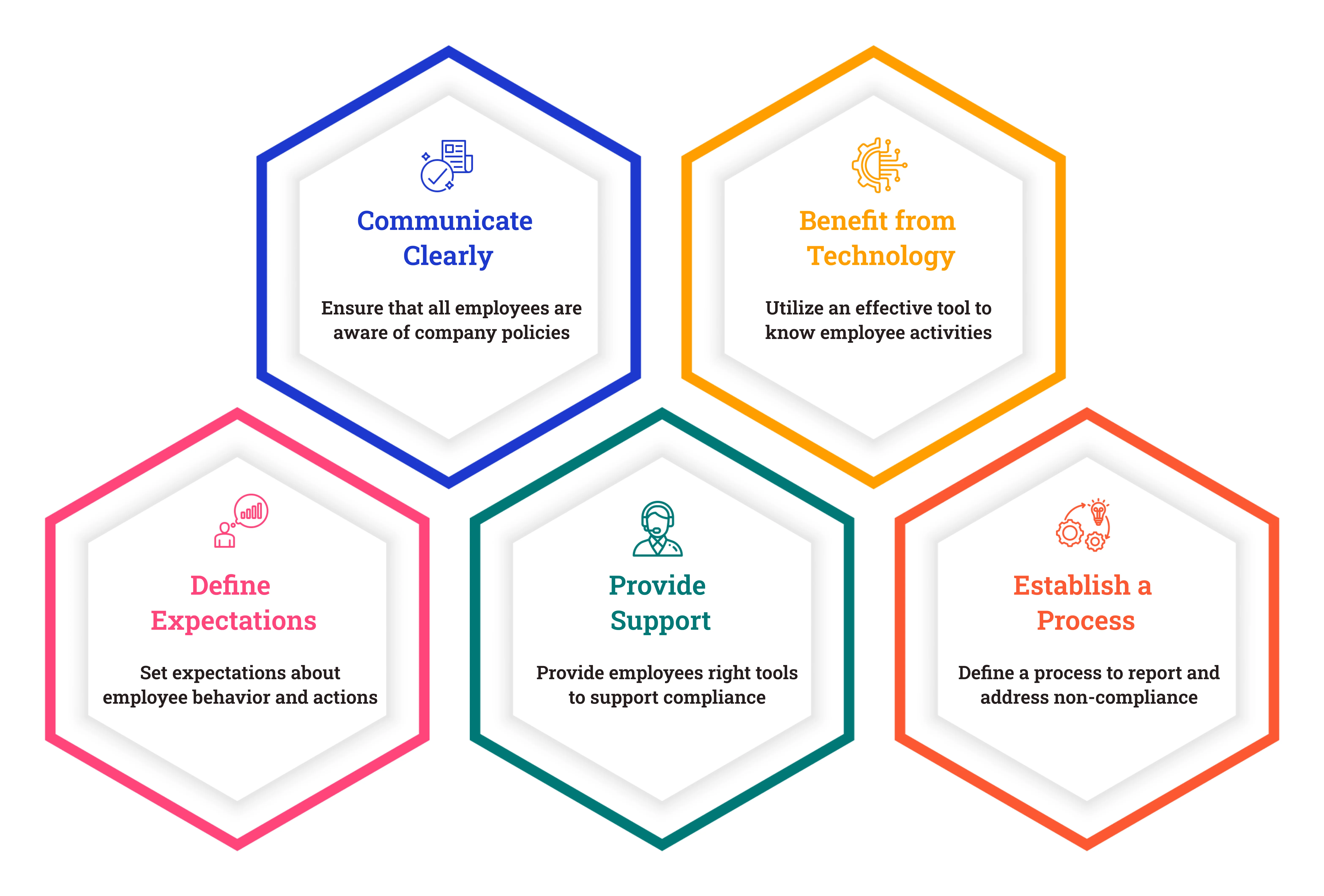
Communication is vital for ensuring employee compliance in hybrid work because it helps to ensure that all employees are aware of company policies, also they understand their responsibilities. With constant communication, you can avoid any misunderstanding about what is expected from employees and what they need to follow to meet the expectations. When employees feel that they are being kept informed and that their concerns are being heard, they are more likely to feel invested in the success of the company and stay motivated to perform more productive work.
2. Use Technology to Your Advantage
Utilize an effective tool to get help in knowing what activities your hybrid teams do and how compliant are their actions. Implementing employee monitoring software can support you with real-time insights into what break and aux time they use, what apps and websites they access, and what hours they work. You can measure their behavior against the clean desk policy and control their risky actions to ensure data privacy and operational efficiency. Also, you can detect what time your teams log in to work; when they log out, and what time they spend on what tasks to measure their productive and non-productive hours.
3. Set Clear Expectations
Setting clear expectations helps ensure employee compliance in hybrid work as it enables employees to be clear about their responsibilities and how to conduct themselves to meet the defined standards. Moreover, it establishes guidelines for employees to follow and perform more productive work in a secure and optimized hybrid work environment. When employees are aware of what expectations organizations have for them, they better focus on performing with more productivity to achieve greater business goals. Well-aware & guided employees are more likely to behave in compliance with organizational policies.
Read More: What can employee monitoring software do
4. Provide Support and Resources
Provide resources to your hybrid working teams to ensure that they have the right tools to know if their actions are compliant, or if they need to improve to correct their actions with non-compliance alerts to maintain a secure hybrid work environment. Supporting your teams with effective employee monitoring software enables them to better serve their responsibilities and help them follow the defined compliance standards. When employees know that they are being supported with timely security alerts that desktop monitoring software provides, they better behave in line with the business policies to work securely. The sense of support encourages them to do their best work and follow compliance in the workplace to better contribute toward efficient and safe business operations.
5. Establish a Clear Process to Report & Address Non-Compliance
Define a clear and structured process to report and address instances of employee non-compliance. This process should include a designated Super Admin or Manager responsible for receiving compliance-related reports, investigating incidents, and initiating corrective actions. A well-defined remedial workflow ensures that issues are resolved quickly, consistently, and in accordance with organizational policies.
By implementing a reliable monitoring and compliance framework, organizations can hold employees accountable for their actions while maintaining transparency and operational integrity. Timely detection and resolution of non-compliance help reduce risk exposure and strengthen overall workplace governance.
Ensuring compliance in the workplace—especially within a hybrid or remote work environment—can be challenging, but it is critical for maintaining security, productivity, and trust. Clear communication, well-documented policies, and the strategic use of monitoring technology enable organizations to set expectations, identify risks early, and effectively manage compliance across distributed teams.
Start your 14-day free trial to implement a robust workplace compliance framework and secure your hybrid workforce with confidence.
Why does communicating with your teams about monitoring help?
Clear communication about monitoring your team’s activities helps them stay aware of the process and address their concerns against compliance tracking to keep them in trust and follow the defined security standards.
How you can address your teams’ concerns to define policy?
You can make your hybrid teams aware of the benefits that employee monitoring can bring to implement a fair and transparent compliance policy. Here, too, the role of clear communication is vital.
What benefits employee monitoring software can bring to ensure compliance?
Employee monitoring software can help you track every single activity of your hybrid teams and measure their actions against the clean desk policy to ensure compliance in the hybrid work environment.
Why gaining employee trust is important before monitoring actions?
Communicating and addressing employee concerns about monitoring helps gain their trust and encourages them to better contribute towards secure and efficient operations.

Table of Contents
Boost productivity and compliance with wAnywhere
Read summarized version with